
Trusted commerce for Nigeria, built to travel across Africa.

Uzaja is a Nigerian commerce platform for products, property, hotels, and verified selling. The company exists for a simple reason: buying online should not feel like gambling, selling online should not require begging for trust, and African commerce should not be forced to choose between speed and safety.

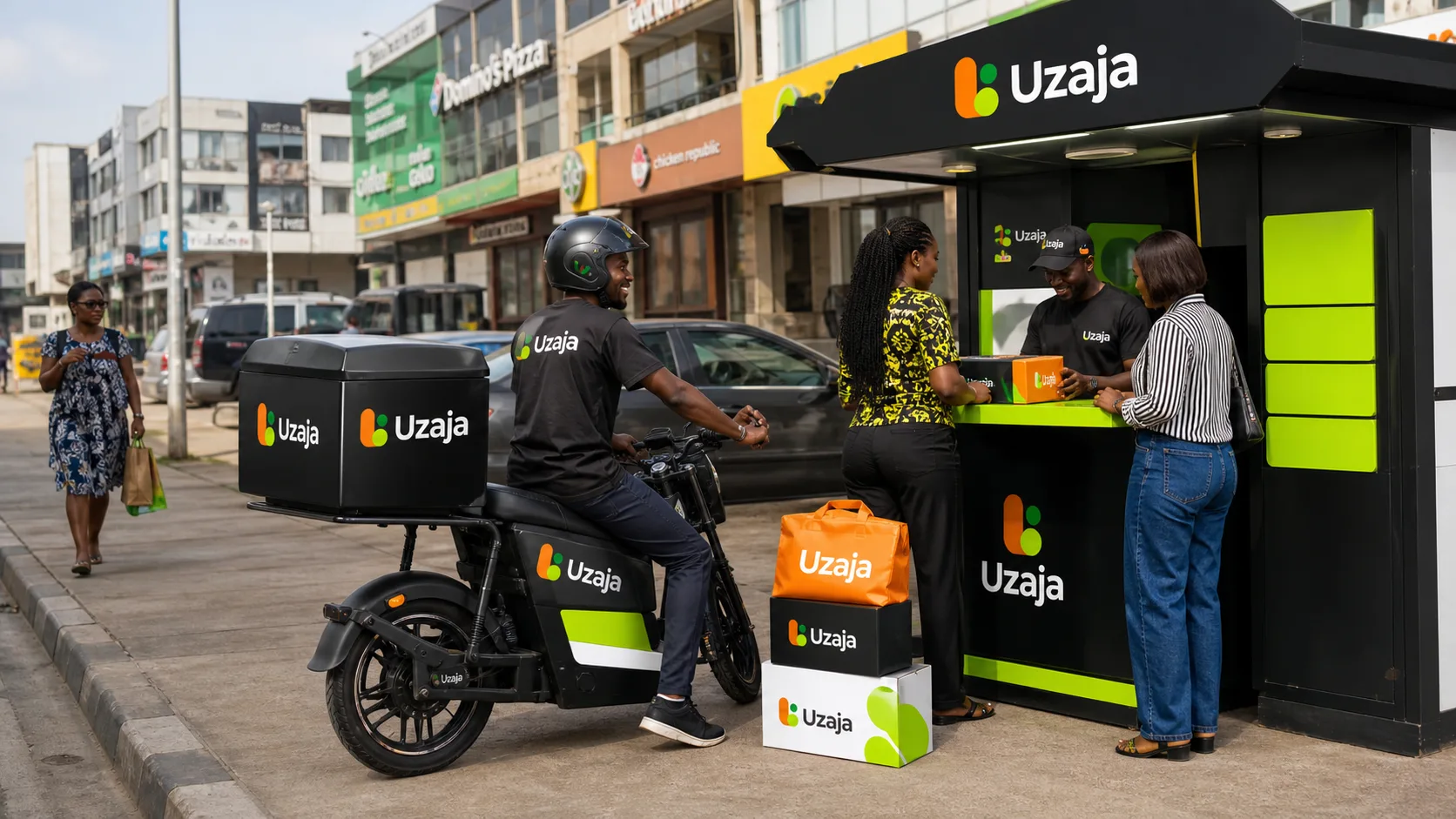
Uzaja buyer, seller, and courier completing trusted commerce in Nigeria
TrustSafePay Protection and seller verification.
AccessProducts, property, hotels, and services.
ScaleNigeria first, Africa next.
Nigeria-first

Uzaja begins where the pain is immediate: local commerce, fragmented trust, and city-by-city delivery realities.

SafePay

Buyer protection helps people shop with more confidence while sellers earn trust through verified delivery.

Multi-market

Uzaja is designed for products, properties, hotel discovery, merchant storefronts, and service-led commerce.

Africa-ready

The long-term vision is a repeatable operating system for trusted commerce across African markets.

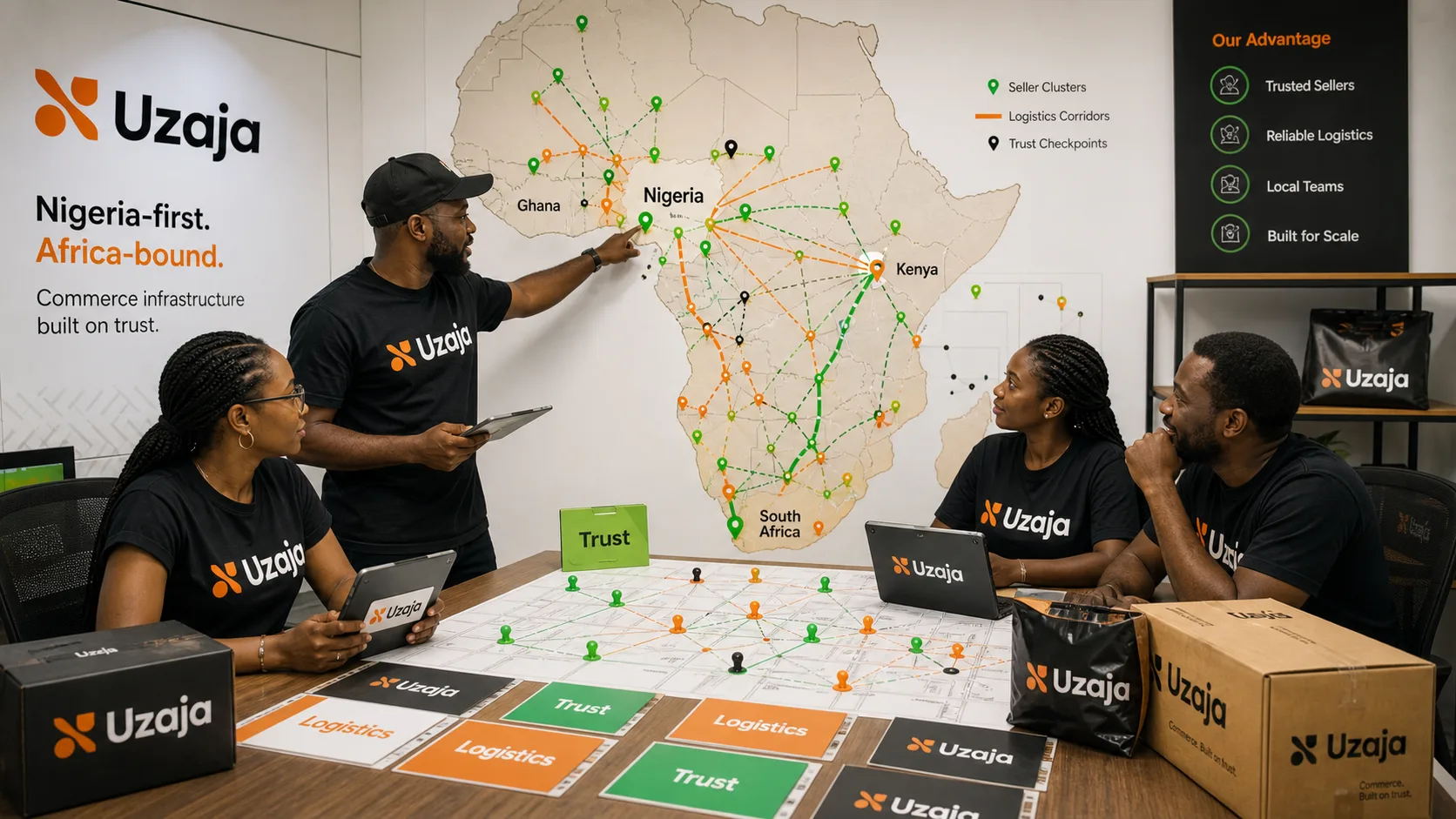
Uzaja team planning a trust-first marketplace from Nigeria
The start: listening to real buyers and sellers before writing the larger story.
Our Start

Uzaja began with a trust problem hiding inside everyday commerce.

Across Nigeria, trade is energetic, fast, creative, and deeply social. A buyer sees a product on a phone, asks a friend, checks a seller page, negotiates in chat, sends money, waits, worries, and hopes the item arrives as promised. A seller takes photos, answers the same questions repeatedly, tries to prove authenticity, chases payment, coordinates delivery, and still carries the cost of doubt. The market is not short of ambition. It is short of infrastructure that makes trust feel normal.

Uzaja was shaped by that gap. The first idea was not to build another ordinary shopping page. The first idea was to make digital commerce feel accountable from the moment of discovery to the moment of delivery. We wanted a platform where buyers could move with confidence, where sellers could grow beyond personal referrals, and where the process of paying, confirming, delivering, and resolving issues was part of the product itself.

That beginning matters because Uzaja is not chasing commerce as a trend. It is responding to the daily friction that stops people from buying from unfamiliar sellers, limits small businesses to their immediate surroundings, and keeps many African transactions trapped inside informal processes. The early conviction was simple: if trust improves, more people participate. If participation grows, merchants earn more. If merchants earn more, cities create more work. If cities create more work, a platform can become infrastructure.
The Goal

Make buying feel safer, selling feel bigger, and delivery feel accountable.

Uzaja’s goal is to connect the full commercial journey, not just list products. Discovery, seller identity, buyer confidence, checkout, delivery proof, confirmation, payout, review, repeat purchase, and support all belong in one trusted loop.

For buyers

Uzaja should help people discover real products, compare options, use SafePay Protection, track progress, confirm delivery, and feel that the platform stands behind the transaction. The buyer should not need to become a private investigator before making an order.

For sellers

Uzaja should help serious merchants build a stronger storefront, prove legitimacy, receive structured orders, promote with video, earn repeat customers, and grow beyond the small circle that already knows them. Trust becomes a growth tool.

For cities

Uzaja should make local commerce more visible and measurable. When more orders move through reliable rails, new roles appear around pickup, packaging, support, verification, content, routing, fleet care, and customer success.

Trust Layer

SafePay is the bridge between interest and confidence.

In many African markets, buyers are willing to pay, but they hesitate because the risk feels personal. What happens if the item is not delivered? What happens if the seller disappears? What happens if the order arrives and it is not what was promised? These questions slow down commerce before technology ever gets a chance to help.

SafePay Protection is Uzaja’s answer to that emotional and practical barrier. It gives the buyer a clearer sense of process and gives the seller a platform-backed path to earn trust. Payment, delivery progress, confirmation, and release are treated as connected steps. This makes the transaction feel less like a leap of faith and more like a managed journey.

Trust is not one feature. It is a set of signals: verified sellers, clearer product media, proper order records, delivery proof, buyer confirmation, support workflows, and policies written in plain language. Uzaja’s belief is that the best commerce platforms do not only make things easier to buy. They make people more willing to buy.

SafePay ProtectionVerified SellersDelivery ProofBuyer Confirmation
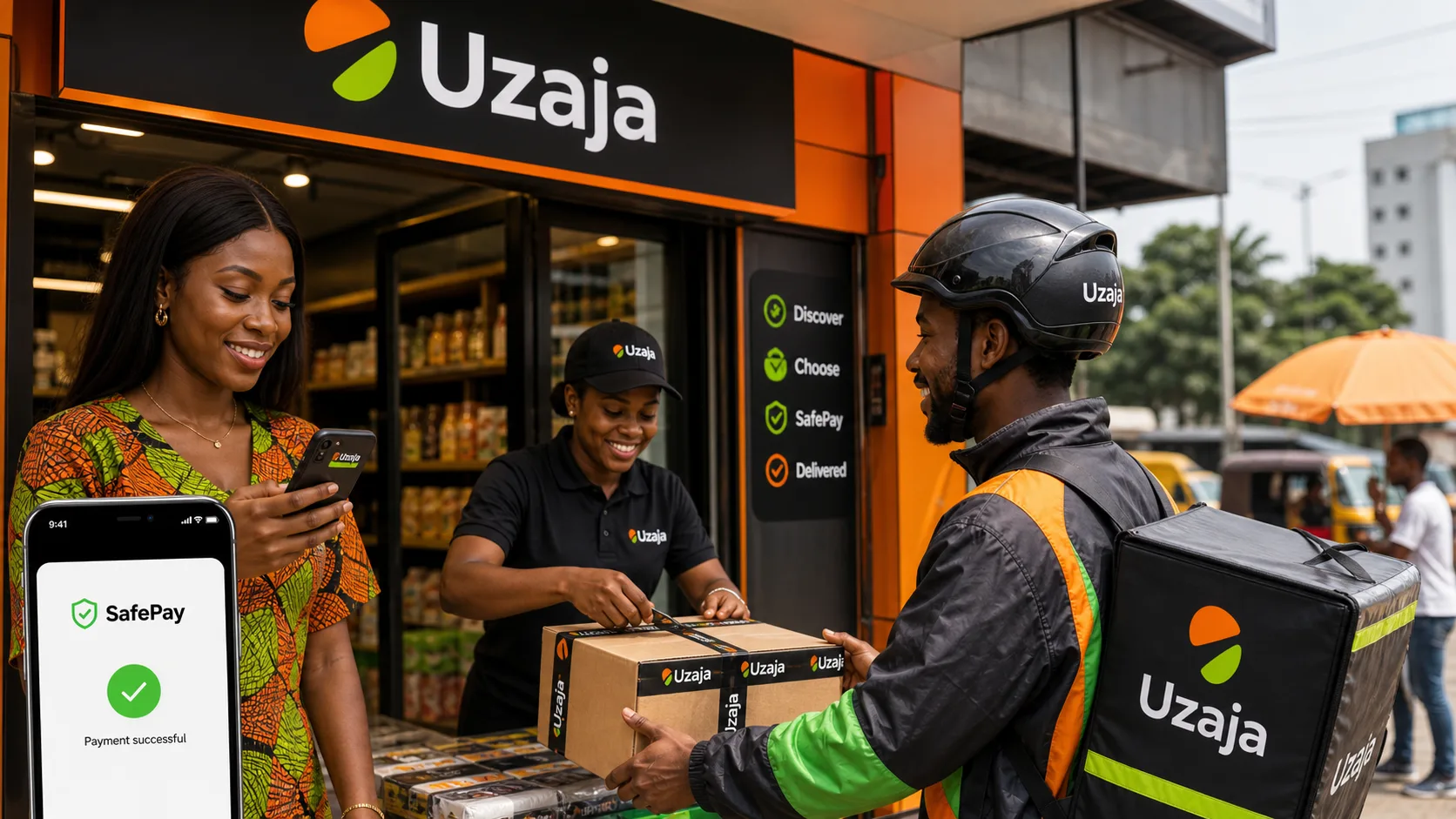
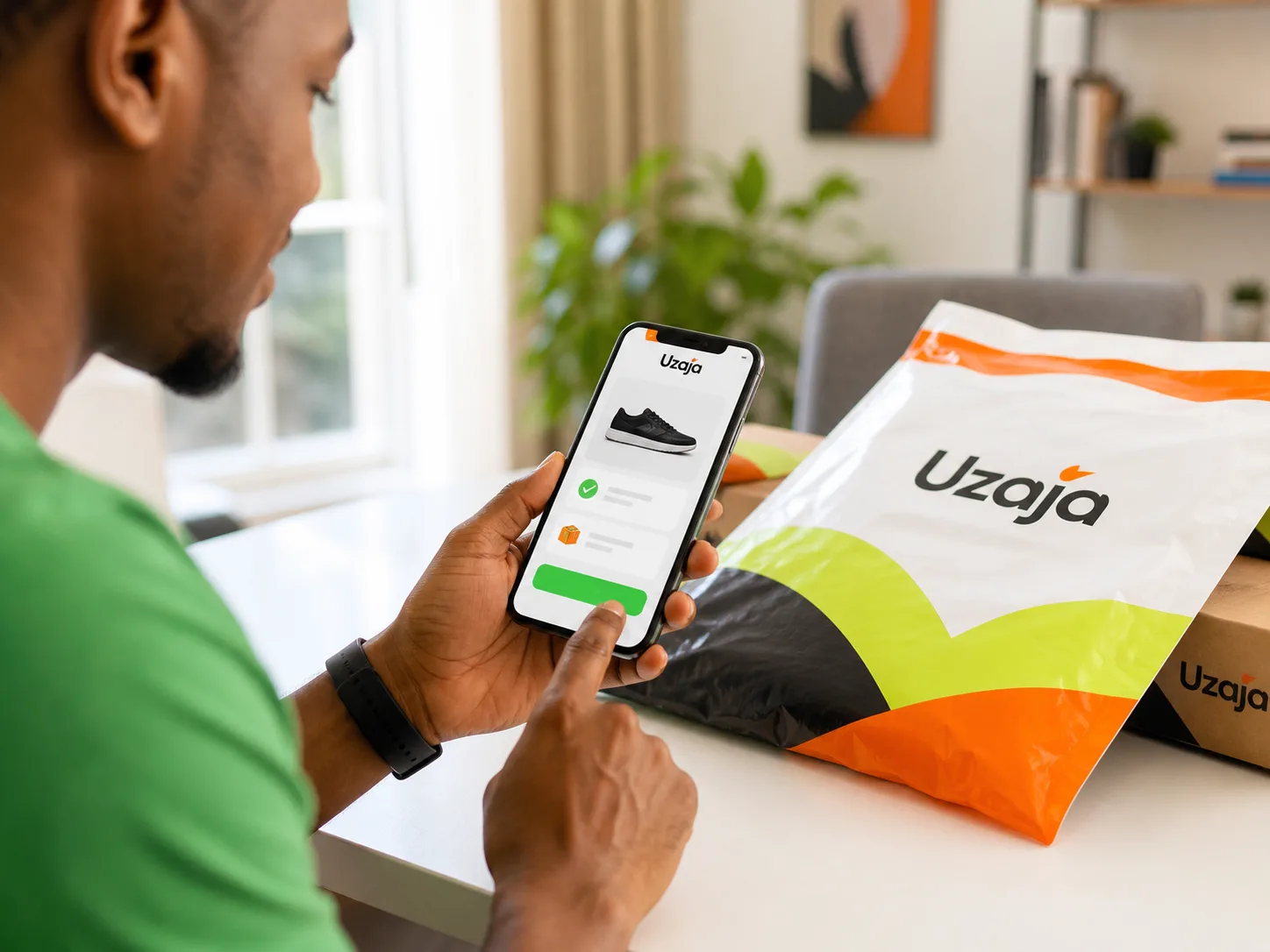
Uzaja SafePay checkout with branded product package
Trust must be visible at the exact moment a buyer is deciding whether to pay.

When trust improves, conversion is not the only thing that changes. The buyer’s posture changes. The seller’s ambition changes. The city’s commercial rhythm changes.

The Customer Journey

The experience should feel clear from the first scroll to the final confirmation.

Uzaja is strongest when the user does not have to think about the machinery underneath. A good transaction should feel understandable, calm, and properly documented, even when the platform is coordinating discovery, seller proof, payment protection, delivery updates, and support behind the scenes.

The journey often begins with curiosity. A buyer sees a product, a room, a hotel, a gadget, a grocery item, or a piece of fashion and asks the same questions millions of Africans ask every day: is this real, is the seller serious, is the price fair, can I trust the process, and what happens after I pay? Uzaja’s job is to answer those questions inside the experience itself.

That means product pages should show enough proof to reduce uncertainty. Seller profiles should help users separate casual listings from serious merchants. Video discovery should make products feel closer to the buyer before money moves. SafePay should explain the payment path in plain language. Delivery updates should reduce anxiety instead of creating more messages. Confirmation should feel like a natural ending, not a confusing extra step.

The same clarity helps sellers. A serious seller should understand what is expected before an order becomes stressful. What should be packed? What proof should be captured? When is payout moving forward? What happens when the buyer has a concern? Where can performance improve? A marketplace becomes more mature when these questions are no longer handled by guesswork.

Uzaja’s customer journey is therefore designed as a loop of trust. Discovery builds interest. Verification builds confidence. SafePay reduces payment fear. Delivery proof creates accountability. Confirmation closes the order. Reviews and repeat purchases turn a single successful transaction into a relationship. The platform wins when that loop becomes familiar enough for people to use again without hesitation.

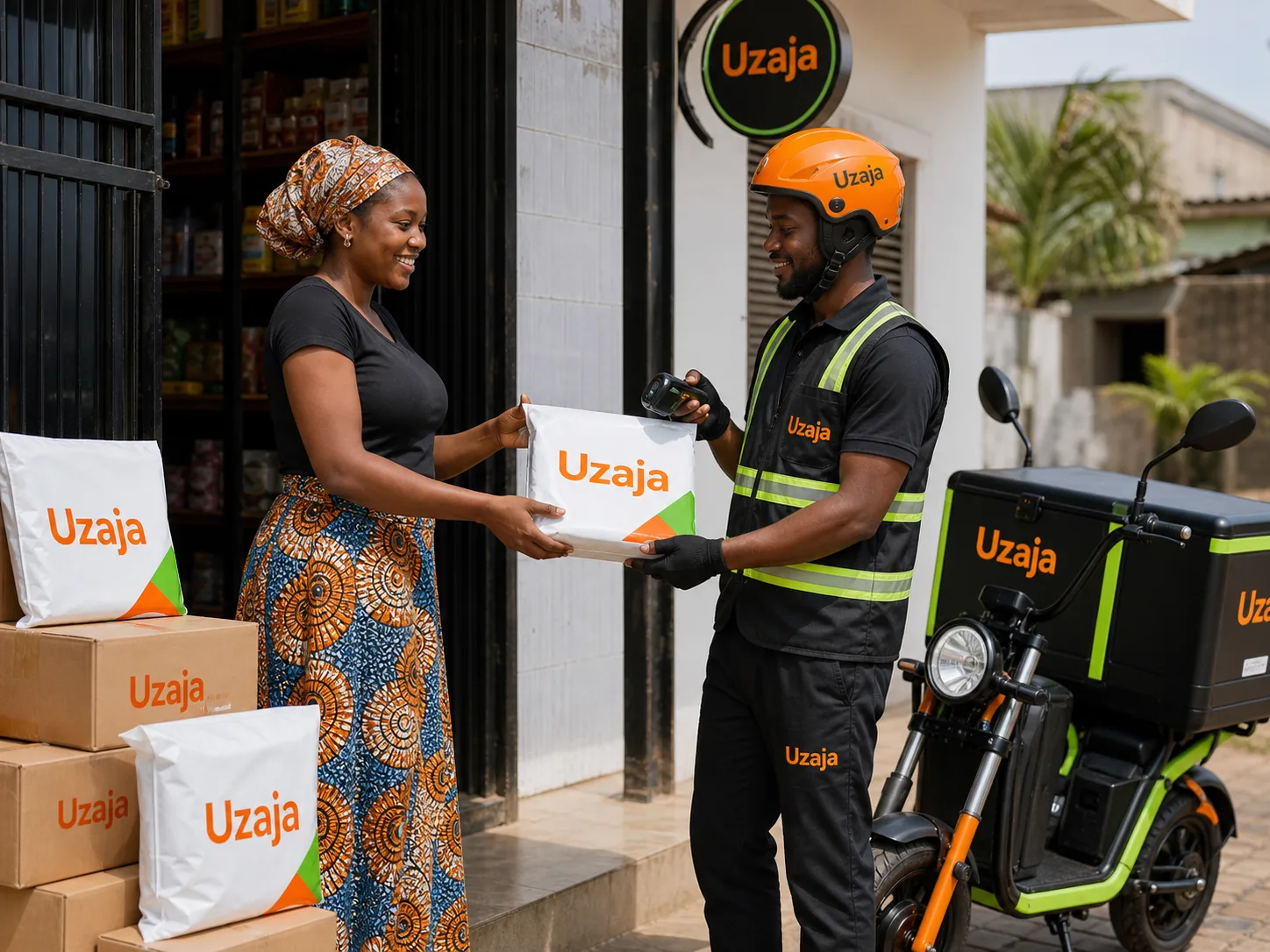
Uzaja seller and courier dispatching a verified order
The middle of the journey matters: order handoff, proof, communication, and delivery discipline.

Discover

Reels, storefronts, categories, and search help buyers find products with richer context than static listings alone.

Decide

Seller identity, media proof, reviews, clear policies, and product detail help users move from browsing to intent.

Protect

SafePay Protection gives the checkout a clearer structure so buyers and sellers understand the order path.

Return

A clean delivery and confirmation experience creates the emotional reason to come back and buy again.

Why Nigeria First

Nigeria is not a test market. Nigeria is the proving ground.

Nigeria gives Uzaja the exact challenge a serious African commerce company must learn to solve: dense cities, entrepreneurial sellers, price-sensitive buyers, trust gaps, infrastructure friction, high mobile adoption, and enormous cultural energy.

To build for Nigeria is to build for complexity. Lagos moves differently from Abuja. Kano moves differently from Port Harcourt. A seller in a busy market may have strong offline demand but limited digital systems. A buyer in another city may love the product but hesitate because delivery and payment feel uncertain. A hotel, property owner, gadget seller, fashion vendor, grocery merchant, and local service provider all need different forms of confidence before they can transact at scale.

That is why Uzaja is designed as more than a catalog. It combines storefronts, discovery, Reels, payment protection, customer communication, and operational workflows. The idea is to make commerce feel local enough to be trusted and digital enough to scale. Nigeria’s market rewards speed, but it also punishes platforms that ignore ground reality. Uzaja’s advantage is the willingness to build around how people actually buy and sell, not around a neat theory of how they should.

The company’s Nigeria-first approach is city-by-city and category-by-category. We want to learn where trust gaps are strongest, where delivery can be most predictable, where merchants are ready to professionalize, and where buyers already show strong intent. From that knowledge, Uzaja can expand with discipline instead of noise.

Uzaja market activation with sellers and buyers in Nigeria
Nigeria gives Uzaja the density, creativity, and friction needed to build a serious commerce operating system.

Products

Everyday goods, phones, gadgets, fashion, groceries, and market-led categories need stronger verification, better media, cleaner checkout, and delivery accountability.

Property

Property discovery needs better signals, clearer contact paths, and stronger confidence before a buyer or renter spends time, travel, and money.

Hotels

Hotels and stays need visibility, trust, and booking confidence, especially for people making decisions quickly from mobile devices.

Uzaja seller preparing orders and expanding beyond local customers
A seller should be able to grow beyond the street, market, or contact list that already knows them.
Seller Growth

Uzaja should make serious sellers easier to believe.

Many Nigerian merchants already know how to source, price, negotiate, package, and sell. What they often lack is a digital trust surface that carries their seriousness beyond people who already know them. A good seller may be excellent in person and nearly invisible online. Another may have loyal customers in one neighborhood but struggle to reach buyers in another city because every new sale begins with suspicion.

Uzaja can change that by giving sellers a stronger identity. A storefront is more than a page. It is a record of proof: product media, verification signals, order performance, response quality, delivery behavior, customer feedback, and category focus. When those signals are arranged clearly, a merchant can earn confidence from strangers without starting from zero every morning.

This is especially important for smaller sellers who cannot compete with the marketing budgets of large platforms or national chains. Trust becomes their leverage. A seller who keeps promises, documents products properly, communicates clearly, and delivers consistently should become easier to find and easier to choose. That is how a platform can help ambition compound.

Uzaja’s seller vision also includes education. Many merchants do not need lectures; they need practical tools, better templates, clearer standards, and performance feedback they can act on. Over time, that creates a healthier marketplace where good behavior is rewarded and buyers learn that verified sellers deserve confidence.

Uzaja team planning Nigeria-first expansion across Africa
The Africa vision begins with a repeatable trust, seller, and delivery model proven in Nigeria.
Africa At Large

Across Africa, commerce is already moving. Uzaja wants to make it easier to trust.

Africa does not need to be taught entrepreneurship. It is already everywhere: in markets, salons, stores, workshops, warehouses, hotel desks, property networks, campus businesses, creator pages, and family-run shops. What many markets need is a stronger digital trust layer that respects local behavior while giving transactions a cleaner structure.

The opportunity across Africa is not only to sell more products. It is to connect buyers and sellers with systems that reduce fear, record commitments, support disputes, confirm fulfillment, and give serious merchants a way to become more visible. Countries will differ. Regulations will differ. Payment partners, delivery routes, and customer expectations will differ. But the underlying need is familiar: people want access, choice, confidence, and fairness.

Uzaja’s Africa vision is therefore practical, not theatrical. Prove the operating model in Nigeria. Build playbooks around merchant verification, SafePay Protection, content-led discovery, customer support, delivery coordination, and job creation. Then adapt those playbooks to markets where the same trust gap blocks digital commerce from reaching its full potential.

What People Should Feel

The best version of Uzaja feels useful before it feels impressive.

People do not fall in love with a platform because it uses big words. They come back because the product respects their money, their time, their effort, and their hope that online commerce can work better than it did the last time.

Buyers should feel calm

A buyer should feel that Uzaja is not rushing them into a risky payment. The experience should make the seller, product, payment path, and delivery expectation easier to understand. Calm is powerful because it turns hesitation into action.

Sellers should feel seen

A seller should feel that the platform recognizes effort. Good product photos, honest descriptions, fast replies, reliable dispatch, and fulfilled orders should build a visible reputation that helps the merchant earn more trust tomorrow.

Partners should feel aligned

Couriers, creators, hotels, property partners, payment partners, and local service providers should understand where they fit. Uzaja works best when the whole commercial chain can see the standard and play their part.

The emotional product is confidence. The visible product is commerce. The long-term product is a network of people who can transact with less fear and more proof.

People Behind The Platform

Uzaja is for the people who keep commerce alive every day.

The story is not only about technology. It is about the seller who takes one more product photo at midnight, the buyer who wants to trust a first order, the creator who can turn product knowledge into income, and the rider who wants structured work instead of chaos.

Uzaja sellers and creators preparing products for digital commerce
Sellers and creators can turn visibility into repeatable income.
Uzaja seller capturing product proof before dispatch
Better proof builds buyer confidence before the order leaves the seller.
Uzaja buyer confirming a successful delivery
The end of a good transaction should feel calm, clear, and worth repeating.
Jobs And Economic Impact

Trusted commerce can create work far beyond the checkout button.

When digital commerce becomes more reliable, the benefit moves outward. Sellers need photography, packaging, catalog support, customer service, and fulfillment discipline. Creators can earn from product education, demos, live selling, and affiliate-style recommendations. Couriers need routing, standards, training, equipment, and safer handoffs. Hubs need coordinators. Customers need support. Cities need operators who understand the ground.

Uzaja’s job creation story grows in phases. In Phase 1, the platform helps more merchants formalize online selling and helps creators participate in commerce through Reels-led discovery. In Phase 2, as order density increases, logistics hubs and EV-enabled last-mile operations can introduce new roles around dispatch, battery handling, fleet care, route monitoring, and delivery quality. Over time, these become skills that can travel across cities and countries.

The most important part is measurement. Uzaja should not talk about jobs as a vague promise. It should track merchants onboarded, active sellers, creator partners, courier partners, hub roles, support roles, training cohorts, EV maintenance partnerships, and city-level activity. Real impact deserves real records.

Uzaja job training hub with logistics, onboarding, and EV charging
The long-term opportunity is not only orders. It is structured work around those orders.
Phase 2 Logistics

The logistics vision: hubs, EV advantage, and on-time delivery discipline.

Uzaja’s logistics story should be sequenced carefully. First, prove marketplace demand and trust. Then use that demand to justify focused logistics hubs in high-density corridors where the platform can improve delivery predictability.

City Hubs

Hubs can organize pickup, sorting, customer handoff, return handling, courier support, and local issue resolution. The goal is not to be everywhere at once. The goal is to be reliable where density makes reliability possible.

EV Delivery

Electric delivery can improve the cost and consistency of short urban routes when charging, maintenance, rider training, and battery care are managed properly. It also creates new technical skills around fleet operations.

On-Time Culture

On-time delivery is a discipline, not a slogan. It requires route planning, proof of pickup, buyer communication, issue handling, local hub accountability, and transparent performance metrics.

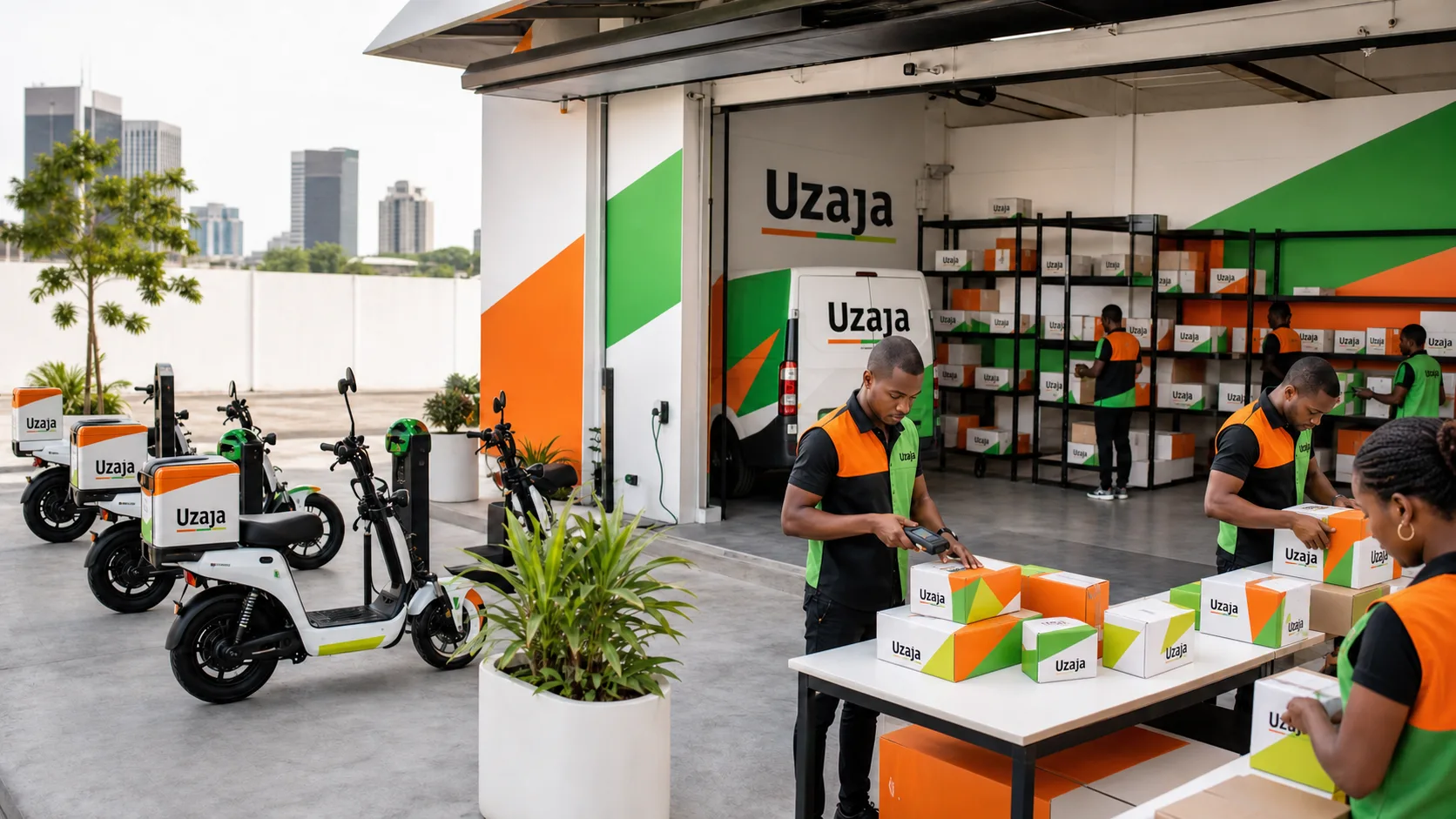
Uzaja Phase 2 logistics hub with branded EV delivery bikes
Phase 2 gives the trust layer a physical operating base.
Uzaja EV logistics training and maintenance skills
EV logistics creates a skills layer around batteries, charging, routing, and fleet care.
How We Build

Uzaja’s principles are simple enough to remember and hard enough to matter.

1

Trust before scale

Growth without trust becomes noise. Uzaja should earn buyer confidence and seller commitment before chasing reach for its own sake.

2

Local reality first

Nigerian commerce is practical, fast, and relationship-driven. The product must respect that reality instead of pretending every market behaves the same.

3

Proof over hype

Every promise should become visible through product behavior, delivery records, seller standards, customer outcomes, and clear data.

4

Opportunity for people

The platform should create value for buyers, sellers, creators, couriers, support teams, technicians, partners, and the cities that host them.

Vision

We want Uzaja to become the trust layer people remember when they think of African commerce.

The future we imagine is ordinary in the best way. A student orders a phone and knows how the payment is protected. A fashion seller in Lagos receives orders outside her immediate network. A property seeker sees better signals before spending a day on visits. A hotel gets discovered by travelers who need confidence quickly. A creator explains a product honestly and earns from the sale. A courier follows a route that is tracked, supported, and respected. A technician learns EV maintenance because local delivery demand made the skill useful.

This is the kind of future Uzaja is building toward. It is not only an app. It is a commercial habit: discover with confidence, pay with protection, deliver with proof, confirm with clarity, and come back because the last experience worked. If we can make that habit strong in Nigeria, we can carry it into other African markets with humility, adaptation, and discipline.

Uzaja’s story is still being written. That is the exciting part. The start came from a real problem. The goal is clear enough to guide the product. The vision is large enough to matter. And the work ahead is practical enough to begin today: serve buyers better, help sellers grow, make trust visible, build operations that keep promises, and create opportunity as commerce becomes more reliable.

That is also why this About page should read less like a corporate profile and more like an invitation. Uzaja is inviting buyers to expect better, sellers to operate with more confidence, creators to make commerce more human, operators to build the standards behind the scenes, and African cities to imagine what happens when trust is designed into the transaction instead of patched on afterward.

The work will require patience. Markets are not won by beautiful interfaces alone. They are won by reliability, service, listening, iteration, partnerships, and the quiet consistency of doing what the platform promised. Uzaja’s vision is large, but its daily discipline is specific: protect the buyer, respect the seller, verify what matters, explain the process, track the order, support the handoff, and make the next transaction easier than the last.

Start
Understand the trust gap.

Listen to buyers and sellers, study where transactions break, and design around confidence rather than only catalog volume.

Build
Connect discovery, SafePay, verification, and delivery proof.

Make the order lifecycle easier to understand and easier to repeat.

Grow
Win city-by-city trust.

Onboard serious sellers, support real categories, and improve buyer confidence through consistent execution.

Expand
Take the playbook across Africa.

Adapt the trust, seller, logistics, and job creation model to markets where the same friction holds commerce back.